Daily Summary2026-06-25
Stories clustered across sources, with day-to-day continuity and threading.

Daya raises $2.4M for Africa stablecoin payment rails
Alliance-backed fintech Daya has raised $2.4 million to build stablecoin payment rails in Africa, entering a market where Yellow Card recently secured Swiss regulatory approval and Standard Chartered hosted a digital assets summit in Accra. The raise intensifies competition in Africa's stablecoin payments infrastructure alongside Ivorypay's X402 machine-to-machine launch. For Ghana and West Africa investors, the clustering of capital and regulatory activity around stablecoin rails signals a structurally important payments layer forming rapidly.
Nigeria NCC telecom ownership rules deepen M&A regulatory risk
Nigeria's NCC has confirmed that prior regulatory approval is mandatory for any telecom ownership changes, creating a firm compliance barrier for M&A activity involving MTN, Airtel, and Glo. The rule reinforces the regional precedent flagged when NCC and CAC jointly mandated the framework earlier in the week, raising deal-certainty risk for investors in Nigerian and broader West African telecom assets. The regulatory tightening compounds an already complex M&A environment for pan-African telecoms.

MTN Ghana launches faster unlimited fibre packages
MTN Ghana has launched new faster unlimited fibre speed packages, deepening its broadband product suite in the Ghanaian market. The move extends MTN's infrastructure investment in Ghana at a time when satellite alternatives like Starlink face regulatory headwinds across Africa. For connectivity investors, the launch signals that incumbent fibre operators retain structural product and regulatory advantages in West African urban markets.
Rwanda national AI agency formalises continental policy benchmark
Rwanda's approval of a national AI agency represents a concrete policy commitment to AI governance and development at the highest level of government, setting a regional regulatory benchmark for other African nations. The move signals that East Africa is formalising AI institutional infrastructure beyond individual startup or academic initiatives. For investors, the agency's delivery track record will determine whether Rwanda can translate policy intent into a competitive AI investment environment.
South African banks bundling telecom services signals convergence trend
South African banks are increasingly bundling telecom services into their product offerings, signalling a structural convergence between financial services and connectivity that mirrors the KCB-Airtel Money integration model in East Africa. The trend is relevant across African markets where mobile money and banking rails are already closely intertwined. For Ghana and West Africa investors, the convergence pattern points to emerging partnership and M&A opportunities at the bank-telco intersection.

Yellow Card goes Swiss while Namibia rejects Starlink again
Yellow Card has secured Swiss regulatory approval to anchor its B2B stablecoin network with cross-jurisdictional credibility, while Namibia has definitively rejected Starlink's appeal, reinforcing regulatory resistance to satellite internet across Southern Africa. The dual signals illustrate contrasting regulatory dynamics: fintech operators building compliance infrastructure in Western jurisdictions are gaining Africa market credibility, while satellite broadband operators face entrenched country-level barriers. Kenya's cybersecurity agency development adds a further governance signal to the multi-market news flow.

Ghana insurance penetration gap frames microinsurance investment opportunity
Ghana's insurance penetration remains at 1%, with digital platform reforms and microinsurance models identified as the most viable routes to closing the coverage gap among informal workers. The signal extends earlier commentary from Ghana's NHIA on the informal sector as the primary untapped health insurance market and the bancassurance distribution thesis. For investors, the persistent penetration gap combined with regulatory reform signals creates a structured entry point for digital insurance platforms targeting Ghana's large informal economy.
IMF unlocks $832M for Ivory Coast, boosting West Africa macro liquidity
The IMF has completed its reviews with Ivory Coast and unlocked $832.8 million in funding, providing a significant macroeconomic liquidity injection into one of West Africa's largest economies. The disbursement supports fiscal stability in Ivory Coast and creates downstream conditions for fintech and startup growth across the broader West African market. For Ghana-focused investors, the regional macro improvement complements Ghana's own debt restructuring recovery and Fitch's 5% GDP growth forecast.

GoldBod's $16.1B gold purchases and 1,184 licensed buyers signal Ghana gold formalisation
GoldBod has spent $16.1 billion on gold purchases in 2025 while licensing 1,184 gold-buying companies, demonstrating the scale of Ghana's state-led effort to formalise the artisanal gold sector. The combined data points signal that GoldBod is reshaping forex flows and creating structured market infrastructure that intersects with fintech payment rails and cross-border capital movements. For investors, the formalisation pace has direct implications for gold-linked fintech products and Ghana's broader foreign exchange dynamics.

African monetary union 2030 target questioned as cross-border payments take priority
Redtech COO Ugo Umeseaka argues that practical cross-border payment infrastructure should take precedence over the ambitious African Monetary Union 2030 target, framing interoperability as the more achievable and commercially relevant near-term goal. The perspective aligns with the broader fintech infrastructure investment thesis around stablecoin rails and multi-currency platforms observed across the week. For regional fintech strategy, the commentary reinforces the investment case for cross-border payment solutions over currency union bets.

ElectroChem seeks $500M for Ada salt refinery and port in Ghana
ElectroChem is seeking $500 million in investment to build a salt refinery and port facility at Ada in Ghana, representing a large-scale West African industrial infrastructure commitment. The project would create significant downstream logistics and energy demand in a region that has attracted growing infrastructure investor interest. For Ghana-focused investors, the scale of the ask signals that large-format industrial capital is entering the country's pipeline alongside tech and fintech deals.

Paystack SME programme deepens Nigeria payments ecosystem support
Paystack has launched a programme to support small businesses in Nigeria, building on its $2,900 SME support package and deepening its embedded fintech services for the country's large SME segment. The initiative extends the Nigeria SME fintech ecosystem signals from LSETF's decade impact review and reinforces platform stickiness strategies in a competitive market. For pan-Africa investors, Paystack's consistent SME focus provides a read-through to similar embedded finance strategies across other African markets.

African leaders convene in Accra on automotive manufacturing shift
African leaders have gathered in Accra to chart a new course for a continental automotive manufacturing revolution, signalling high-level political commitment to building domestic vehicle production capacity. The convening has direct read-through implications for logistics, supply-chain infrastructure, and the e-mobility sector, where Spiro's $270 million raise has already set a new deal-size benchmark. For Ghana-based investors, hosting the summit reinforces Accra's positioning as a continental policy and economic hub.

Standard Bank's $175M sustainable finance deal signals African green capital appetite
Standard Bank has led a $175 million sustainable finance deal for Wilderness Holdings, signalling sustained institutional appetite for green capital deployment in Africa's conservation and tourism-adjacent sectors. The deal adds to the growing pipeline of ESG-linked African finance instruments alongside Gold Fields' $107 million environmental bond and Zambia's debt-for-energy AfDB template. For cleantech and impact investors, the transaction reinforces that structured green finance is becoming a mainstream African capital markets product.

LIFT airline adopts crypto and mobile pay, signalling adjacent sector fintech adoption
South African airline LIFT has become the first carrier in the country to accept cryptocurrency and mobile payment options including Apple Pay and Google Pay, signalling fintech payment adoption expanding into adjacent consumer sectors. The move reflects the broader African fintech maturation trend where digital payment rails are increasingly embedded across non-financial industries. For investors, the development underscores growing merchant-side demand for diverse digital payment acceptance beyond traditional banking infrastructure.

Ghana construction cost inflation shows cement deflation versus equipment cost rise
Ghana's May 2026 construction cost data reveals a divergence between cement price deflation and rising equipment costs, creating mixed signals for capital expenditure planning in the country's infrastructure and real estate sectors. The data is relevant for investors underwriting construction-heavy projects including the Keta Port development and the Farmer Service Centre rollout. Combined with Ghana's rising producer inflation and tariff hike signals, the construction cost dynamics add further complexity to capex modelling for Ghana infrastructure deals.

DRC Ebola outbreak at record pace signals digital health infrastructure demand
The Congo Ebola outbreak has reached its highest first-month case total in any outbreak on record, according to the WHO, creating urgent demand conditions for digital health infrastructure and data systems across Central Africa. The scale of the outbreak reinforces the investment case for health data platforms and telemedicine infrastructure in high-risk regions, extending the health digitisation signals from Uganda's maternal death tracking system. For investors in African digital health, the crisis underscores both the urgency and the addressable market for health emergency response technology.

SABI positions as internet infrastructure layer for Africa
SABI is articulating a strategic positioning as a foundational internet infrastructure layer for human participation in Africa's digital economy, broadening its ambition beyond its initial B2B commerce focus. The thesis is ambitious but lacks the concrete financial or partnership data needed to assess near-term investability. For investors, the framing is worth monitoring as SABI's execution track record will determine whether the infrastructure layer positioning translates into defensible market position.

Ghana Women's Development Bank awaits BoG licence as new SME lending vehicle nears launch
Ghana's Women's Development Bank is awaiting a Bank of Ghana licence to begin operations, signalling the imminent launch of a state-backed SME lending vehicle with a gender focus. The bank complements existing signals around Bank of Ghana's call for increased SME lending and the broader fintech credit gap in Ghana's productive sector. For investors, the new institution represents a potential distribution and co-lending partner for fintech players targeting women-owned enterprises in Ghana.

World Cup opportunity scan identifies five African startup sectors for near-term deal flow
A thematic analysis has identified five African startup sectors positioned to benefit from the upcoming FIFA World Cup, providing a near-term deal flow framework for investors seeking event-driven growth opportunities. The sectors identified span fintech, logistics, hospitality tech, media, and travel, aligning with broader infrastructure and connectivity investment signals observed across the week. For Ghana and West Africa investors, the World Cup angle adds a tactical overlay to longer-horizon structural investment theses.

Flutterwave grants 25 entrepreneurs at YEEP 2026, signalling ecosystem support commitment
Flutterwave has awarded 25 grants to young Nigerian entrepreneurs at its YEEP 2026 programme, extending its ecosystem support activities beyond its landmark $3.2 billion Series E raise. The initiative signals continued investment in grassroots fintech ecosystem development, though the scale of 25 grants limits the immediate commercial significance. For investors, the programme reinforces Flutterwave's platform positioning but the Nigeria-centric focus constrains its read-through for other African markets.

Egypt fintech-asset management partnership offers pan-Africa digital investing model
Beltone and Telda have partnered in Egypt to expand digital investing access, combining an incumbent asset manager with a digital platform to reach a broader retail investor base. The model has direct relevance for pan-African digital wealth management as the continent's investment platform competition deepens, complementing Chaka's Hisa platform launch from Nigeria. For Ghana-focused investors, the Egypt model offers a structural template for bank-fintech investment product collaboration.
Ghana biodiversity loss and cashew pricing data frame agritech investment context
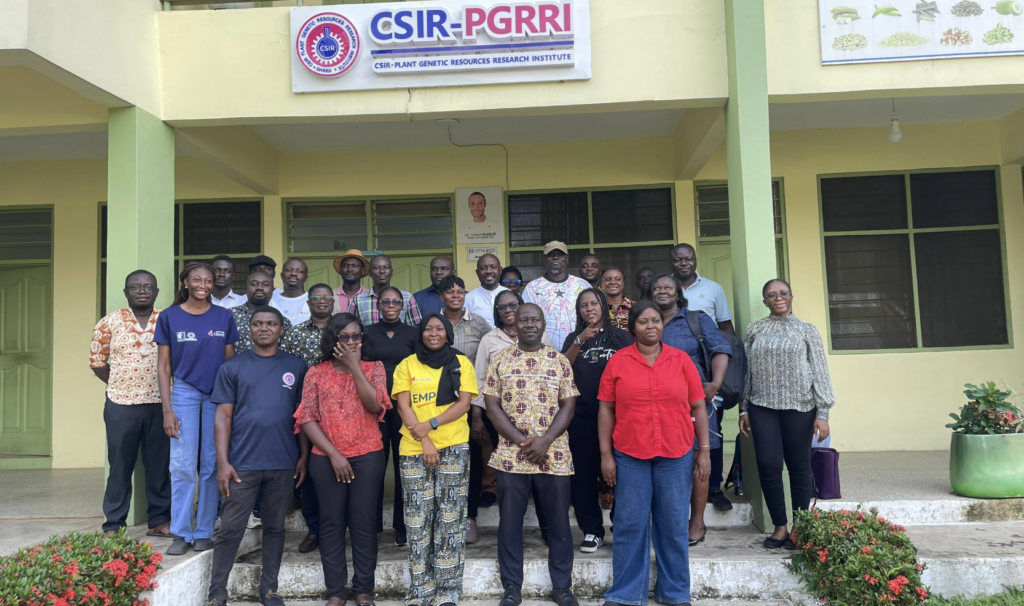
Ghana's CSIR-PGRRI has flagged accelerating biodiversity loss as a threat to long-term food security, while TCDA has clarified regional cashew farmgate pricing benchmarks for the 2026 season. Together the signals add environmental risk and supply-chain pricing context to Ghana's structured agritech investment opportunity, which has been building through organic certification, grain fund, Farmer Service Centre, and Feed Ghana Programme signals. For agritech investors, biodiversity risk reinforces the case for precision agriculture and seed conservation technology investment.

OnePurze launches Nigerian cross-border payments platform at early stage
OnePurze has launched a platform for Nigerians to send and receive international payments, entering a market already intensely contested by Monzo, OneDosh, SendOva, and established players. The startup has disclosed no funding figures, positioning it at the very early stage of the Nigerian cross-border payments competitive landscape. For investors, the continued stream of new entrants reinforces the market's attractiveness while signalling increasing commoditisation pressure on corridor fees.

South Africa AI skills gap debate signals continent-wide workforce readiness challenge
A new opinion piece argues that South Africa's youth unemployment crisis demands an AI skills revolution, framing workforce AI readiness as a structural economic imperative rather than a discretionary training initiative. The commentary extends the Africa-wide AI workforce gap narrative flagged by Ghana's KAIPTC cybersecurity governance project and the WFP digital agriculture fellowship earlier in the week. For edtech and AI training investors, the persistent cross-country framing of the skills gap reinforces a scalable and continent-wide addressable market.

Africa minerals value-addition narrative frames cleantech supply chain opportunity
A new analysis frames Africa's mineral wealth as the foundation for a value-addition industrial strategy, arguing that processing and refining minerals locally is essential to capturing economic benefit from the global critical minerals boom. The thesis is directly relevant to cleantech supply chain investors and aligns with ElectroChem's $500 million Ada refinery ambition and Ghana's broader gas hub positioning. For investors, the value-addition narrative reinforces the long-horizon case for industrial processing infrastructure in Ghana and West Africa.
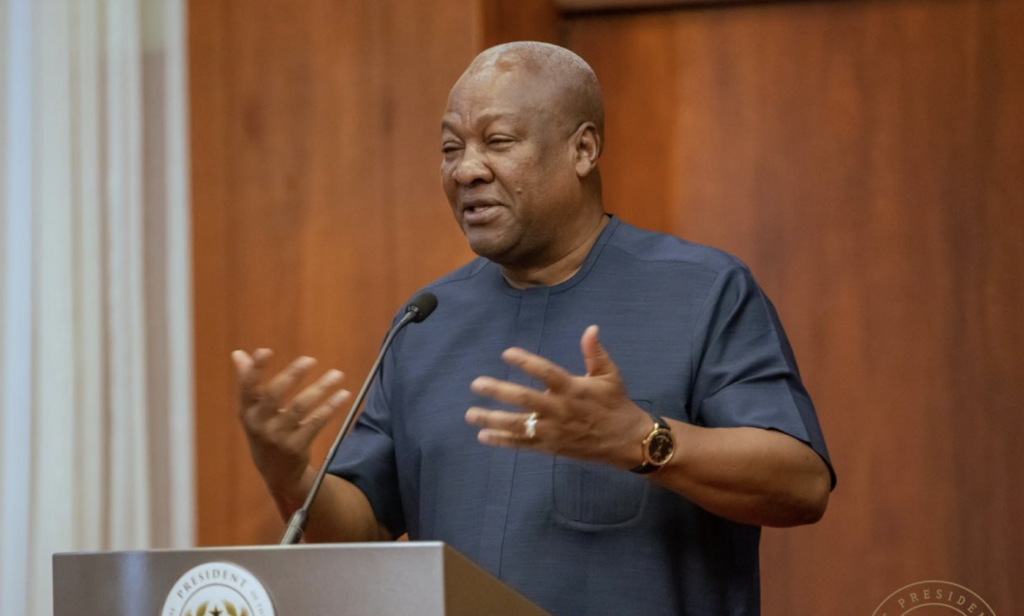
Ghana Sentuo Oil Refinery Phase 2 groundbreaking signals energy infrastructure progress
President Mahama has cut the sod for Phase 2 of the Sentuo Oil Refinery Project in Ghana, marking a concrete construction milestone for one of the country's most significant energy infrastructure investments. The groundbreaking adds to Ghana's energy sector development signals alongside the gas hub ambition, PURC tariff adjustments, and the Green PPF facility. While not a tech-sector investment directly, the refinery's scale and downstream energy supply implications are relevant context for Ghana's industrial and digital economy power requirements.