Daily Summary2026-06-23
Stories clustered across sources, with day-to-day continuity and threading.

Namibia rejects Starlink license appeal, deepening African regulatory resistance to satellite internet
Namibia's communications regulator has dismissed Starlink's appeal against its license rejection, marking a firm regulatory stance against satellite internet entry. The decision extends the incumbent-versus-satellite competitive dynamic flagged earlier in East Africa to Southern Africa, reinforcing that regulatory resistance is a continent-wide structural risk for LEO satellite operators. African connectivity investors must now factor in country-level regulatory unpredictability as a material variable for satellite broadband plays.

MTN confirms Africa-wide 3G shutdown timeline, signalling major infrastructure transition
MTN has confirmed the timeline for shutting down 3G networks across Africa, with Nigeria marking the end of a two-decade era of 3G connectivity. The shutdown frees up spectrum and capex for 4G and 5G densification but creates near-term coverage risk for users and businesses in areas not yet upgraded. For investors, the transition accelerates the infrastructure upgrade cycle and amplifies demand for affordable 4G devices and data services across MTN's footprint.

Ghana PURC raises electricity tariffs 3.49% from July 1, pressuring energy startup economics
Ghana's Public Utilities Regulatory Commission has approved a 3.49% electricity tariff increase and a 0.85% water tariff rise effective July 1, directly raising operating costs for businesses and households. The increase compounds margin pressure on energy-intensive startups and SMEs already navigating Ghana's rising producer inflation and street FX premium. The tariff hike simultaneously strengthens the unit economics case for distributed and off-grid energy solutions targeting commercial customers.

Payaza's Shopaza pan-African eCommerce platform expands with AI integration across 23 countries
Payaza has launched Shopaza, a pan-African eCommerce platform spanning 23 countries with integrated payments infrastructure and AI-powered product discovery. The expanded geographic footprint significantly broadens the initial six-market launch signal, positioning Shopaza as one of the more ambitious cross-border commerce bets in the current cycle. The AI integration layer differentiates the product from legacy marketplace models and raises the competitive stakes for other pan-African eCommerce players.

Zipline study quantifies $850–$1,200 annual income uplift for Ghanaian households near drone hubs
A new study has quantified the economic impact of Zipline's drone logistics operations in Ghana, finding that households near a Zipline hub gain between US$850 and US$1,200 in additional annual income. The data provides rare empirical evidence of the downstream economic multiplier from drone logistics infrastructure, moving the investment thesis beyond delivery metrics into community-level impact. For investors in last-mile logistics and drone technology, the findings offer a concrete social and economic return framework to support capital deployment.
African fintech product expansion: Yoco AI deal, CBN data localisation, and Nigeria credit gap in focus
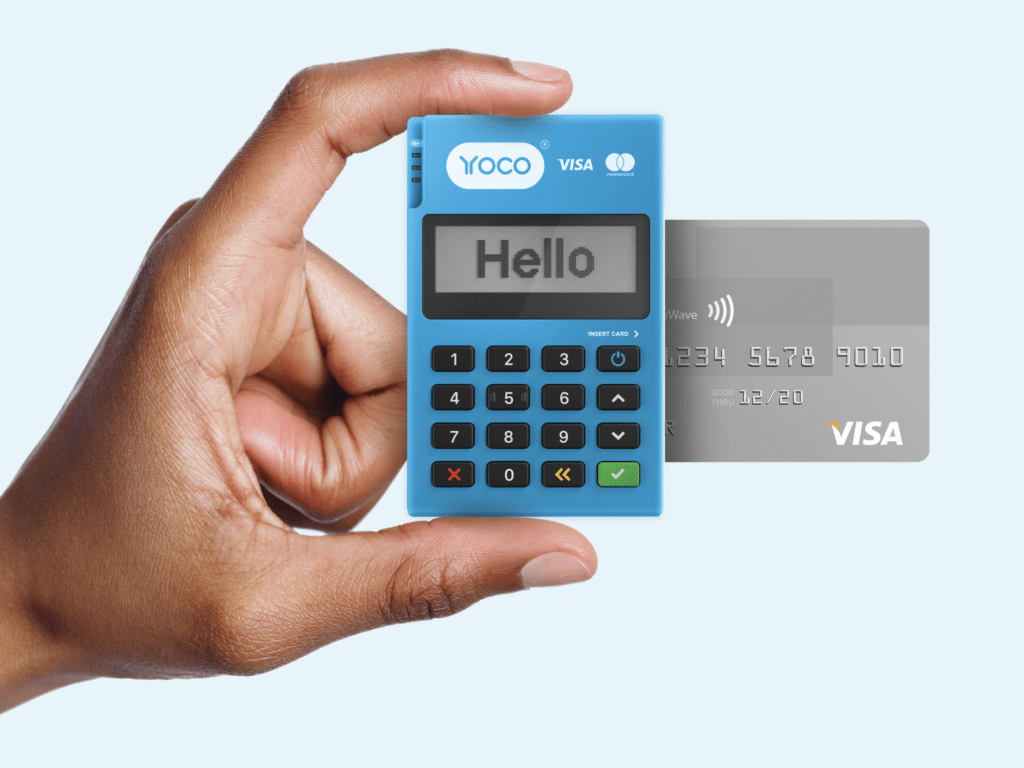
South Africa's Yoco has struck an AI deal to deepen its SME payments suite, while Nigeria's persistent consumer credit gap — where banks lend ₦10 to corporates for every ₦1 to consumers — underscores the structural fintech lending opportunity. CBN data localisation compliance pressure continues to add regulatory cost risk for fintech operators in Nigeria. Together the signals illustrate an African fintech landscape simultaneously advancing product sophistication and navigating rising regulatory complexity.

Somalia submarine cable working group launches with IFC backing, signalling East African connectivity push
Somalia's National Communications Authority has convened its first submarine cable technical working group with IFC support, signalling a structured push to integrate East Africa's most underserved market into global connectivity infrastructure. The development extends the undersea cable geopolitics narrative as more African nations formalise their cable planning processes. The Zanzibar 300 billion shilling fibre deal adds a complementary regional broadband infrastructure signal for East Africa.

African VC matures as exit discipline and non-dilutive capital trade-offs dominate investor debate
Investor sentiment across 22 African VC sources has converged on exits as the defining metric of ecosystem maturity, while a parallel analysis critiques non-dilutive capital as carrying hidden trade-offs that founders underestimate. Africa's $100 billion FDI moment adds macro-level capital flow validation, though concentration patterns mean many markets remain underserved. The Nordic-Africa investor bridge via TechBBQ and Lagos's positioning as Africa's top hub add new capital corridor and benchmark signals to the evolving funding landscape.

KCB-Inchcape Kenya 95% tractor financing deal offers concrete agri-mechanization funding model
KCB Bank and Inchcape Kenya have launched a structured financing product offering 95% of tractor purchase costs to Kenyan farmers, providing a replicable agricultural mechanization funding model. The deal demonstrates how commercial banks can bridge the agri-mechanization financing gap without requiring full collateral, a model relevant to Ghana's Feed Ghana Programme and Farmer Service Centre rollout. Ghana's avocado export opportunity framing adds a complementary export-chain agritech angle worth monitoring for investors.

Ghana digital workforce and non-interest banking reforms signal new policy and financial product frameworks
Ghana's National Youth Authority CEO has called for urgent policy reforms to protect the country's growing digital gig workforce, flagging a regulatory gap with direct implications for platform economy operators. Separately, Ghana's regulators and commercial banks have completed non-interest banking training in Malaysia, signalling imminent introduction of Islamic finance product frameworks in the Ghanaian market. Together the developments indicate that Ghana's financial services regulatory environment is widening in scope and complexity.

Ghana $15B export earnings target and GSE mining footprint gap frame capital markets depth challenge
Ghana's Federation of Associations of Ghanaian Exporters has set a $15 billion export earnings target by 2030, while data shows mining holds only 0.09% of GSE trading value in the first five months of 2026 despite its economic significance. The disconnect between sector economic weight and capital markets representation highlights a structural capital markets depth gap that constrains investment liquidity in Ghana. For investors, the export target provides a long-horizon demand signal while the GSE data underscores ongoing limitations in domestic listed market depth.

Telecel Ghana expands youth coding and robotics programme to Ashanti region
Telecel Ghana's Ashanti Codes programme has graduated its first cohort of 25 pupils in Obuasi, marking a concrete delivery milestone for the telco-led digital skills initiative. The graduation confirms early execution against the 1,000-student training target announced earlier in the week and signals sustained institutional commitment to digital skills beyond Accra. The programme remains modest in scale but contributes to the broader ecosystem-building narrative for Ghana's tech talent pipeline.

Nigerian AI ed-tech and super-app activity signal West Africa's growing multi-vertical platform competition
Nigerian AI ed-tech startup StudyCrew has launched a gamified, AI-powered learning platform, adding education to the growing list of verticals attracting early-stage AI applications in West Africa. Simultaneously, anyworkx is evolving into a super-app model that aggregates service access and commerce in Nigeria, signalling multi-vertical platform competition deepening in the region. Together the developments illustrate an accelerating Nigerian startup activity cycle across AI, edtech, and platform commerce.